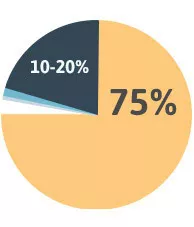
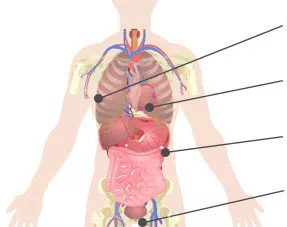
- Pleural Mesothelioma 75% of all cases
- Pericardial Mesothelioma 1% of all cases
- Peritoneal Mesothelioma 10-20% of all cases
- Testicular Mesothelioma < 1% of all cases
It generally isn’t difficult for doctors to discern one type of mesothelioma from another. This is because the cancer grows directly into body structures near where it formed before spreading to other parts of the body. Doctors will clearly see more tumor growth in the chest cavity with pleural mesothelioma, and more tumor growth in the abdominal cavity with peritoneal mesothelioma.
While the same imaging scans and biopsy techniques are used to diagnose all types of mesothelioma, the name and location of the procedure will differ depending upon which type of mesothelioma is suspected. Certain minor surgical procedures that help with mesothelioma diagnosis also vary depending upon the suspected mesothelioma type.
For example, a mediastinoscopy is a minor surgery that takes samples of mediastinal tissue, such as lymph node tissue, to help determine how far pleural mesothelioma tumors have spread in the chest. A paracentesis is a test for peritoneal mesothelioma that extracts fluid from the abdominal cavity so doctors can examine it for signs of cancer.
Doctors consider all forms of mesothelioma to be rare. They also consider all of the types be fast-spreading, which explains why they like to determine the stage of the cancer as soon as possible. The type of cancer affects your treatment options and impacts your life expectancy. Medical research shows that oncologists have more success treating peritoneal mesothelioma than the other three types.


No comments:
Post a Comment